
Website & Development
Chained to your web developer for every change? Here's how to stay in control

Copy for AI
No, you shouldn’t need your web developer for every small change.
You just want to change a phone number or put a new job vacancy online.
And yet you have to send an email, wait for a quote, and finally pay an invoice for five minutes of work. Sound familiar?
Many business owners feel stuck in web developer lock-in for even the smallest tweak. They wonder whether that’s actually normal.
The verdict: it doesn’t have to be this way. Own your domain, hosting and CMS access, and you’re back in control without becoming a developer.
Here’s why you’re stuck, what you can expect, and how to win back control of your own website step by step.
Why does every small change to your website cost extra?
Because of choices that were never discussed out loud, rarely ill will.
When every small change to your website costs extra at your web developer, it’s usually the sum of those choices.
The most common causes:
- No CMS or an awkward one: your site is hard-coded or built in a system only the agency can access.
- You have no access: logins for hosting, CMS, domain and analytics all sit with your web designer.
- Unclear agreements: it was never agreed what falls under maintenance and what counts as extra work.
- The business model: for some agencies, those one-off changes are a steady source of income.
The business model isn’t the villain
That last point sounds harsh, but it isn’t necessarily malicious.
Many agencies simply bill their hours. If you depend on them for everything, those hours add up.
The real problem isn’t that they invoice you. It’s that you have no alternative.
Small invoices add up
Those small invoices are one of the hidden costs of a website nobody puts in the first quote.
For example, say you change a price, a vacancy and a team photo each month.
That’s three tickets a month nobody budgeted.
Being stuck with your web designer: is that normal?
It’s very common, but it isn’t a law of nature.
Many business owners ask us this exact question: “I’m stuck with my web designer for every change, is that normal?”
There’s a difference between being healthily dependent and being unhealthily stuck.
Healthy versus unhealthy dependency
Here’s the line side by side:
| Healthy dependency | Unhealthy lock-in | |
|---|---|---|
| What you outsource | strategy, technology, larger development | typos, blog posts, price changes |
| Access | you own every login | the agency holds the keys |
| Agreements | maintenance versus extra work on paper | decided invoice by invoice |
| How it feels | a partner worth the money | a bottleneck |
Healthy means you have a partner for strategy, technology and larger ongoing development. You need that, and it’s worth the money.
Unhealthy means you knock on the door, pay and wait for every typo, new blog post or price change. That isn’t a partnership; it’s a bottleneck.
Where to draw the line
The line is simple: routine content you should manage yourself, complex custom work not.
An honest partner draws that line together with you and puts it in writing.
Want to learn how to recognise such a partner? Read our guide on how to choose a web agency.
And watch for the red flags of a web design agency.
How do you become independent of your web developer?
Through ownership, not by doing everything yourself.
The question “how do I become independent of my web developer” is about three things: you decide, you have access, and you consciously choose what to outsource.
Three steps get you there.
1. Claim access to your own digital assets
This is the foundation. Make sure you own:
- your domain name, registered in your name, not the agency’s
- your hosting account, or at least administrator access
- your CMS, with your own admin login
- your analytics and Search Console
If any one of these sits with someone else, you’re vulnerable. These are the keys to your house.
Not sure who legally owns what? Our guide on who owns my website walks through it.
Check the domain and Search Console
Two checks make this concrete.
ICANN’s registrant rights and responsibilities make the registrant solely responsible for the domain, and entitled to the registrar’s transfer instructions.
So make sure the registrant is your company, not the agency. Our guide to choosing a domain name covers registration.
In Search Console, only an owner has full control. Google advises keeping at least one verified owner on the property, so add yourself as one.
You’ll find it under Settings, then Users and permissions:
Our guide to Google Search Console explains the rest of the tool.
2. Get a manageable CMS
A good content management system is your liberation.
With it, you adjust texts, photos, vacancies and prices yourself, without opening a ticket.
You don’t have to become a developer. You only need to type text and click save.
Our guide to editing your website in a CMS shows what that looks like day to day.
Common CMS options
Open source systems such as WordPress and Drupal let you take your site to another partner:
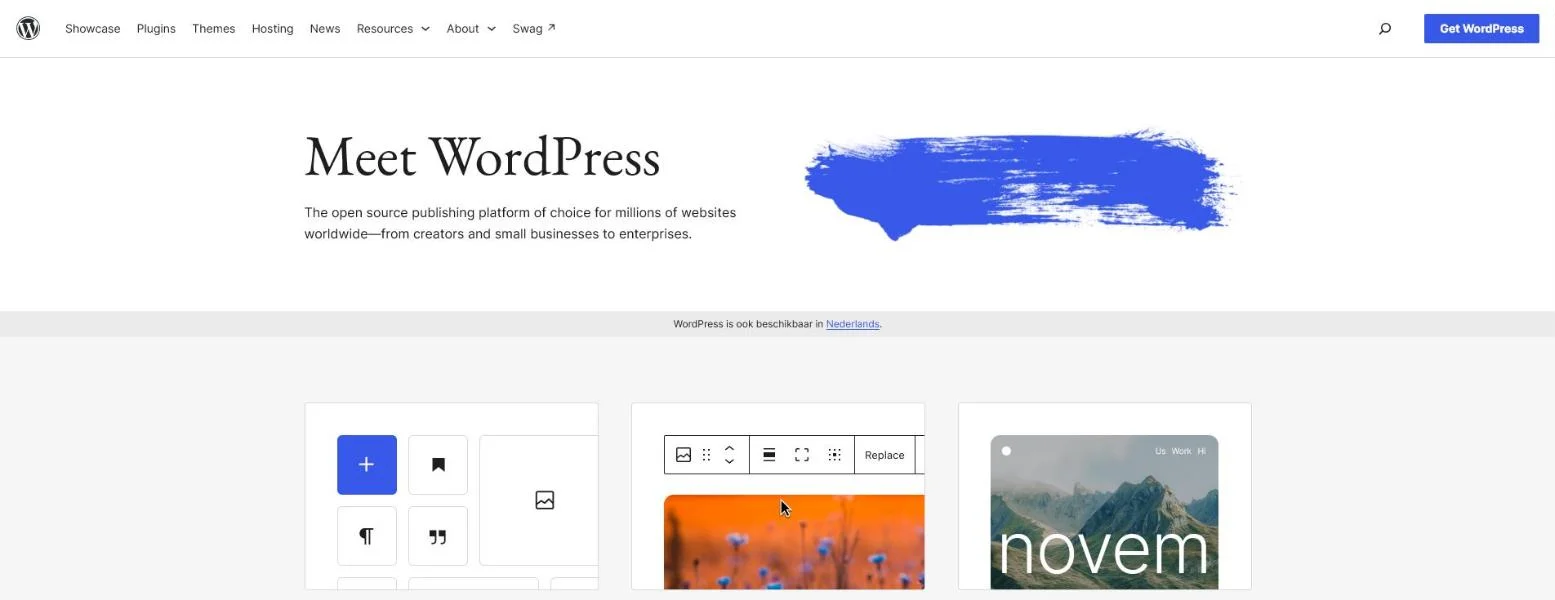 WordPress.org, October 2026. Open source means any developer can pick up the site, not only the one who built it.
Drupal works on the same open source principle, often for larger sites:
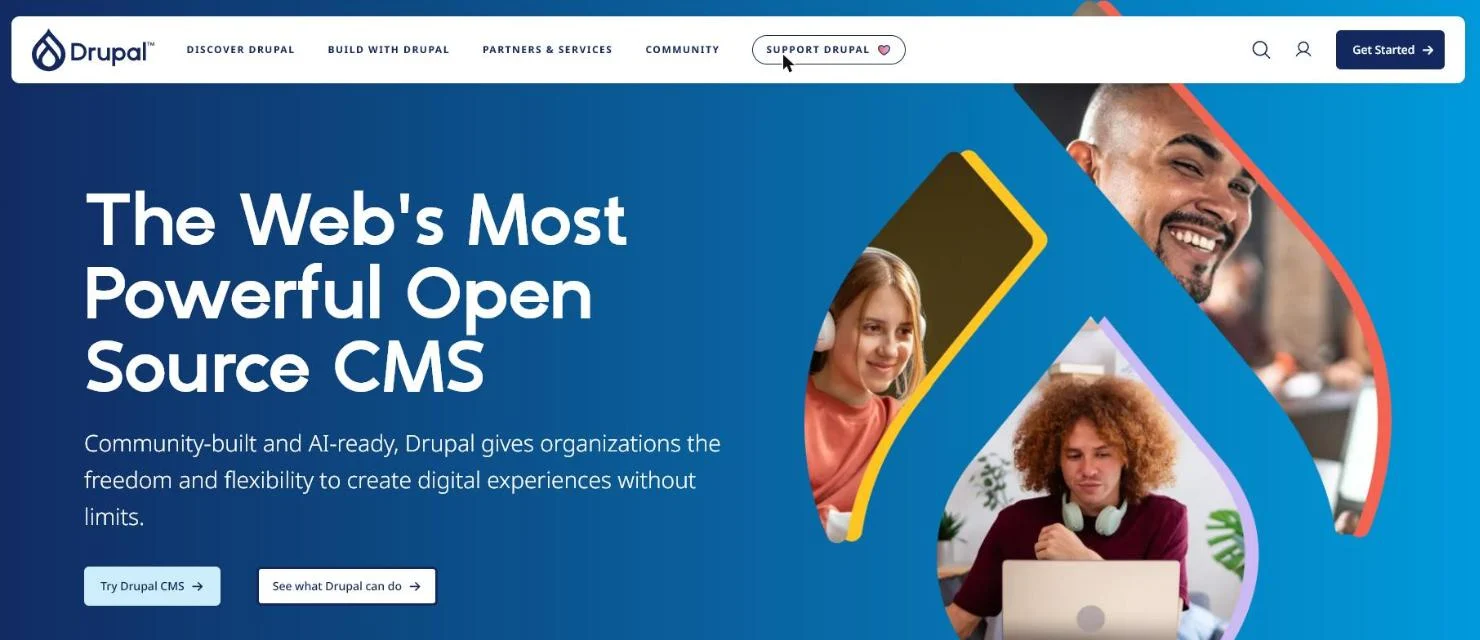 Drupal.org, October 2026.
A hosted platform such as Webflow is the other route. There, check what you can export before you sign.
Platform lock-in is its own topic, covered in our guide to CMS vendor lock-in.
Safe controls, not total freedom
The art lies in the balance. Too much freedom and you accidentally wreck your own layout. Too little and you’re stuck again.
A well-thought-out website architecture gives you safe controls for what you change often, and keeps the rest stable.
Our experience: digital-native companies are moving to agentic websites. No plugin updates, no security warnings, and updates go fast.
Unsure which system suits you? Our guide on which CMS to choose compares the options.
3. Decide together what you do and what you outsource
Independence doesn’t mean you do everything alone. It means you choose.
The trade-off between a freelancer, an agency or in-house comes into play here.
So does the question of whether you mainly need a website builder or a digital strategist right now.
Put the outcome in a website maintenance contract, so everyone knows what’s included.
What you are entitled to expect from a good partner
Transparency, on paper. That’s the short answer.
It isn’t fair to tar every marketing partner or every agency with the same brush. Many do excellent work.
The point is that you know what you can reasonably expect.
Five things a transparent partner gives you
- Clear agreements: what falls under maintenance and what’s extra work, on paper.
- Your own access: to your domain, hosting, CMS and data, without hassle.
- A CMS for daily content: you manage it yourself.
- Prices up front: so an invoice never surprises you. Read up on what having a website built costs.
- A clean handover: whenever you want to switch, including a proper data processing agreement for your data.
Response times belong in writing too. Our guide to a website contract with an SLA shows what to include.
What you don’t have to accept
What you don’t have to accept is a web designer who doesn’t respond, is unreachable or keeps making you wait.
A partner who lets you down the moment you need them doesn’t deserve the name.
So ask the right questions to your web design agency up front.
Already ghosted? See what to do when your web designer disappeared after launch.
Switching without panic: here’s how to approach it
Sometimes the conclusion is that you’re better off with a different partner.
That doesn’t have to be a drama, provided your ownership is in order.
A clean switch runs like this:
- Take inventory of who has access to what.
- Request an export of your content, data and any source code.
- Arrange the transfer of domain and hosting into your name.
- Choose a new partner who takes transparency as a starting point.
Here’s that order in one picture:
Back up before anything moves
Watch out: take a full backup before you change any login. Our guide to website backups explains what to keep.
We wrote a detailed guide on transferring a website to another agency so you forget nothing.
An AI tool instead of an agency?
Thinking of an AI tool instead of an agency?
First weigh AI website builder versus agency.
A website that works for you too, not just looks nice
Winning back control is one thing. But a website should do more than stand still: it should attract customers.
More and more B2B buyers orient themselves entirely online before making contact. A growing share of those searches now begins in AI assistants like ChatGPT.
In G2’s March 2026 buyer survey, 51% of B2B software buyers said they start research with an AI chatbot more often than with Google.
Publishing speed matters
Whoever can publish content smoothly can respond far faster to that reality.
Fresh, relevant content is, after all, the engine behind SEO for lead generation.
How does it all fit together?
See what a lead generation agency does.
Frequently asked questions
Is it normal that every small change to my website costs extra at my web developer?
It happens often, but it isn’t a law. Routine changes such as texts, photos and vacancies you should be able to do yourself in a manageable CMS. Genuine custom work on functionality or design may of course be charged. The key is that this distinction is clearly agreed up front.
I am stuck with my web designer for every change, is that normal?
It’s common when you have no access of your own and no workable CMS, but it isn’t healthy. Once you own your domain, hosting and CMS, the power shifts back to you. You keep collaborating on the bigger matters, but you’re no longer dependent for a typo.
How do I become independent of my web developer without becoming a developer myself?
You need three things: your own access to all your digital assets, a CMS in which you can safely manage text, and clear agreements about who does what. You don’t have to learn to code. You only have to type and save; the rest stays with your technical partner.
What if my current agency is unreachable or does not respond?
Then switching is a legitimate option. First make sure you have an export of your content and data, and that domain and hosting are in your name.
Then choose a partner who makes transparency the standard.
Ready to take back control?
You deserve a website you can manage yourself, and a partner who’s honest about what you should and shouldn’t do yourself.
At Customer Impact we build sites through website development and give you your own access. We also think along on strategy, lead generation, ads, SEO and GEO.
We’re a small team, so we move fast and often do more than you expect.
Contact us and we’ll check together who holds the keys to your site today.
Free website scan
Enter your website and get an automatic scan within minutes, with concrete technical and SEO improvements. No sales pitch.
We only use your details for your scan. No spam, unsubscribe anytime.