
Website & Development
Web Designer Disappeared After Launch? Why a Long-Term Partner Works Differently

Copy for AI
Your web designer disappeared after launch? You’re not alone, and it’s rarely your fault.
Your site is live, the invoice is paid and then: silence. A small text edit, a new photo or a question about your form, and suddenly your web designer stops responding.
The verdict: most builders who vanish aren’t scammers. They sold a project, not a relationship. Secure your access first, then pick a partner whose aftercare is in writing.
Below: why this happens, what you can expect, and how a long-term partner works differently.
Why your web designer or web builder disappears after launch
Because most web designers and agencies sell a project, not a relationship.
Their business model revolves around building, delivering and moving on to the next client. Once your website is live, their work is done in their eyes.
A confusion of roles
That explains why so many business owners think afterwards: my web builder has disappeared, and I can’t change anything on my site myself.
It isn’t ill will, but a confusion of roles. You thought you were buying a partner; they were selling a product.
The four common causes
Most cases come down to one of these:
- No aftercare in the quote. Maintenance and updates were never put in writing.
- A freelancer who moves on. A solo operator takes a permanent job or quits, and your file disappears with them.
- Too low a price. Whoever bids sharply on the build has no margin to stay reachable afterwards.
- No handover. You never received the logins, hosting or source code.
The freelancer case is common enough that we wrote a separate guide for when a freelancer ghosted you.
Project builder versus ongoing partner
The difference isn’t about talent or technique, but about how someone fills their role.
A project builder delivers a finished object. An ongoing partner stays involved in what the site is supposed to do: attract visitors, build trust and generate leads.
The project builder
- Focuses on the launch, not on what comes after.
- Communication runs smoothly until the invoice is paid.
- Updates are loose assignments, if anyone even picks up.
- Strategy and growth are your problem.
The long-term partner
- Thinks along about goals, not just about design.
- Stays reachable for advice, even months later.
- Builds on data: what works, what doesn’t, what can be better.
- Combines web with SEO, GEO, advertising and lead generation.
Side by side
| Project builder | Long-term partner | |
|---|---|---|
| Ends at | The launch | Never, by design |
| Reachable | Until the invoice is paid | Within an agreed time frame |
| Updates | Loose jobs, if picked up | Part of a maintenance plan |
| Measures | Whether it looks right | Visitors, leads, conversions |
Unsure which type you need?
Read web developer or digital strategist, who do you need.
My web designer is unreachable, what now?
Act calmly and in a structured way. That matters more than panic.
Are you already stuck because your web designer no longer responds after the site was delivered? Work through these four steps:
Step 1: Gather your access
Look for logins for your domain name, hosting and CMS.
Whoever is registered as the domain’s holder holds the key.
For a .be domain, DNS Belgium states that the registrant is the sole owner.
It sends the transfer code (valid for 7 days) to the holder’s email address on file.
So check that this is your address, not the designer’s.
Tip: a domain registered in your own company name makes this step easy. Our guide to choosing a domain name for your business covers how to register it right.
Step 2: Send one last, businesslike request
Ask in writing for the transfer of access and files.
Keep it correct and dated.
For example: “Please transfer the hosting login and the site files to us by Friday.”
If it ever escalates, that email is your proof.
Step 3: Check your contract
Does it say anything about ownership, source code or maintenance?
That determines your position.
Watch out: if you hold customer data on your site, check whether a data processing agreement with your web agency exists.
That isn’t a detail. When an agency processes personal data on your behalf, Article 28 of the GDPR requires a contract.
Article 28(3)(g) is the clause to look for. The agency deletes or returns all personal data at the end of the service, at your choice.
Step 4: Plan the switch
If things stay stuck, a new partner can take over your site.
For that last point we’ve created a concrete action plan: read how to transfer a website to another agency.
Why waiting is risky
An abandoned site doesn’t just stand still.
It ages.
WordPress’s own security guide says you “should always keep up to date with the latest version”. Older versions “are not maintained with security updates” (WordPress hardening guide).
WordPress has offered automatic updates since version 3.7.
The same guide says to keep your plugins updated too. Attackers target “old/outdated plugins and software”.
Many sites run on a CMS like WordPress, and that CMS needs regular updates:
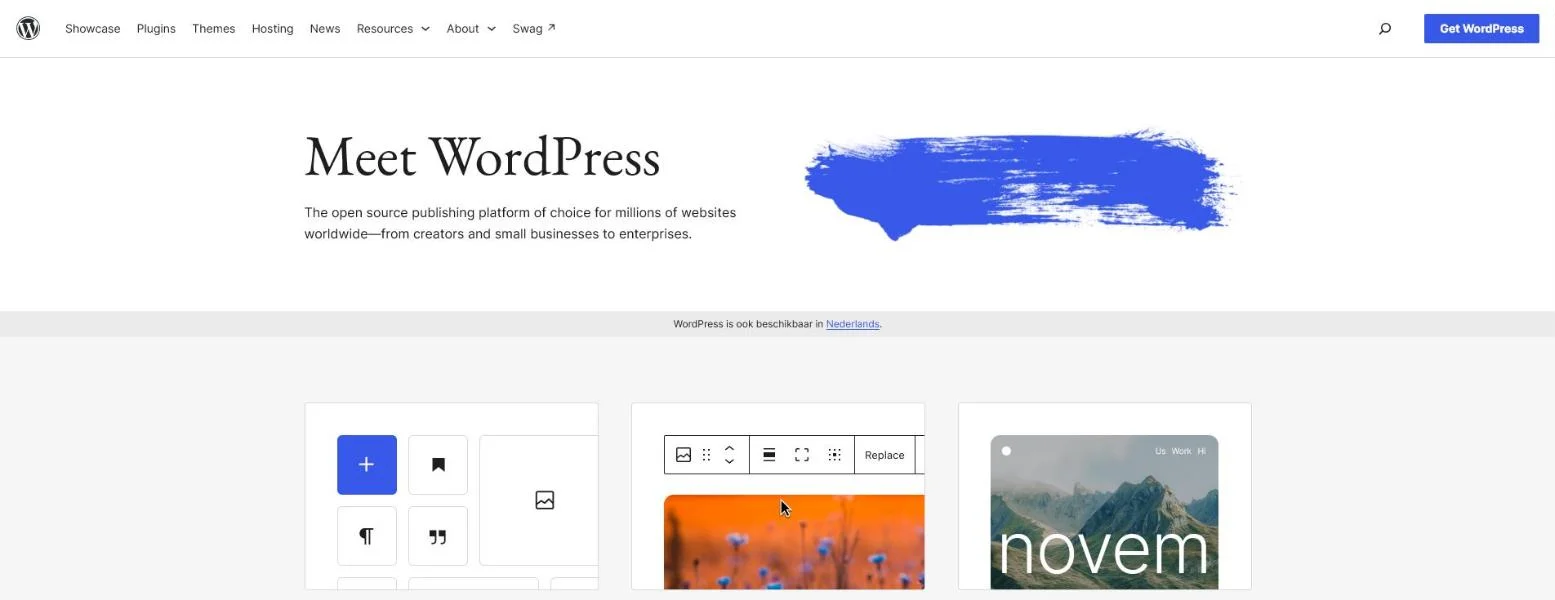 WordPress.org, October 2026. If your site runs on it, someone has to apply core and plugin updates after launch.
Nobody applying those updates is how a site gets hacked. Our guides on WordPress security and what to do when WordPress is hacked cover both sides.
What you are entitled to expect from a good partner
Good aftercare isn’t a luxury. It simply comes with the job.
An unreachable builder feels like bad luck, but it’s mostly the result of vague agreements. This is what you can expect:
- Ownership of your site. Domain name, hosting and source code are in your name.
- A clear point of contact. You know who to call, and within what time frame you get an answer.
- Maintenance by agreement. Updates, backups and security sit in a clear website maintenance plan.
- Thinking along about results. A partner looks at your visitors and conversions, not just the look.
- Transparent pricing. No surprises afterwards. Look at what it costs to have a website built to form realistic expectations.
A website maintenance contract puts those points on paper.
Speed is part of aftercare
Thinking along about results includes how fast the site is.
For example, a partner checks your Core Web Vitals after launch. Here’s what that check looks like for our own site:
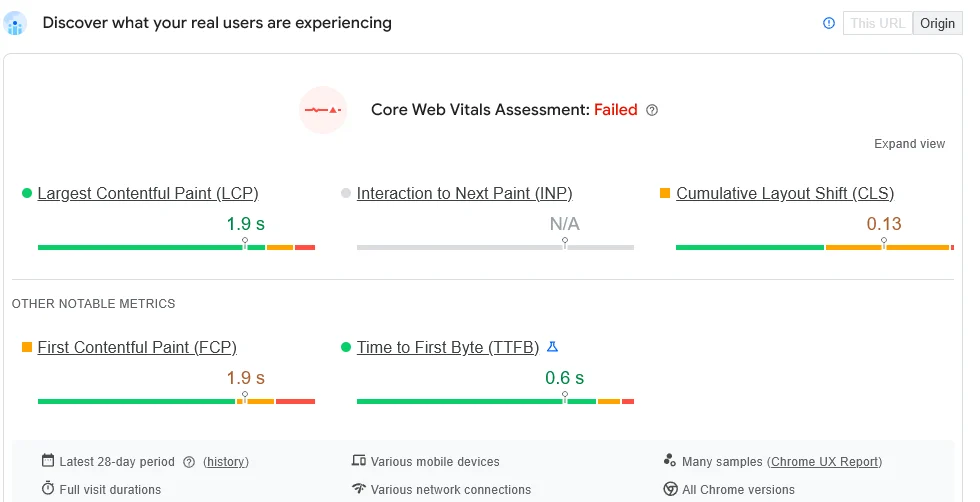 Our own mobile field data in PageSpeed Insights, October 2026. One weak value is enough to fail, which is why someone has to keep watching after launch.
LCP is fine at 1.9 s. But CLS sits at 0.13, so the assessment fails.
A builder who’s gone never sees a result like that. A partner fixes it.
Your website is where buyers meet you first
More and more B2B buyers research thoroughly online before making contact.
A growing share of that first impression runs through your website, and through AI assistants like ChatGPT.
A site that no one can update therefore ages quickly and quietly costs you leads.
Our experience: AI and digital-native companies now move to agentic websites.
No plugin updates, no security warnings, fast changes.
How do you choose a partner who won’t disappear?
Ask the right questions before you sign. That’s the best way to avoid an unreachable web designer.
Ask explicitly about three things:
- How is aftercare arranged?
- Who becomes the owner of the files?
- How quickly do you get help after the launch?
Prepare the conversation
A few useful resources to walk in well prepared:
- Choosing a web design agency: the criteria that really count.
- Questions to ask your web design agency: a concrete checklist.
- Freelancer, agency or in-house: the pros and cons of each model.
Check where the site will live too. Our guide to choosing web hosting explains why the account should be in your name.
Think beyond the build
A website is only valuable if it’s found and brings in customers. For example, when a buyer searches for your service.
Want your site to bring in leads? Start with SEO for lead generation.
Then read what a lead generation agency does.
Frequently asked questions
My web designer no longer responds after the site was delivered, is that normal?
It unfortunately happens often, but it shouldn’t be normal. With a project builder, involvement ends at delivery. With a real partner, availability afterwards is precisely the starting point.
Web builder gone, I can’t change anything on my site myself. What are my options?
First make sure you gain access to your domain name, hosting and CMS. If that fails, a new partner can take over your site or, if needed, rebuild it on a platform you do control.
My web designer is unreachable, have I lost my website?
Usually not. If your domain name is in your name, you keep control. The biggest hurdle is generally access to hosting and files, and there’s almost always a solution for that.
How do I stop a new agency from ghosting me all over again?
Make aftercare, ownership and availability concrete and in writing before you sign. A transparent partner is happy to set this out upfront rather than keep it vague.
Is an AI website builder an alternative if I can’t reach anyone?
For very simple sites that can help, but you miss out on strategy and human advice. We compare both thoroughly in AI website builder versus agency.
Ready for a partner who keeps picking up?
You deserve a website that grows with your business, and someone who picks up the phone when you need something.
At Customer Impact we don’t just build your site through our website development approach. We think along about strategy, lead generation, ads, SEO and GEO.
We’re a small team, so we move fast. Contact us and we’ll start by checking what access you still have.
Free website scan
Enter your website and get an automatic scan within minutes, with concrete technical and SEO improvements. No sales pitch.
We only use your details for your scan. No spam, unsubscribe anytime.