
Growth & Strategie
Random Tasks or Real Strategy? How to Spot Marketing Strategy vs Random Tasks

Copy for AI
A real strategy ties every task to a goal; random tasks don’t.
That’s the whole difference in marketing strategy vs random tasks, and it decides whether your budget works or just gets spent on motion.
The verdict: if your partner can’t explain how today’s action serves this quarter’s goal, you’re paying for activity, not a plan.
Every month you get a report full of numbers. Posts go out and ads are running.
Still, a nagging feeling remains: is there a plan behind what my agency does? You’re paying for growth, but mostly you see activity.
That feeling is worth investigating. Here’s how to tell the difference and what a real approach looks like.
Why does it feel like your agency is just winging it?
Usually not because of bad intent, but because of three recurring patterns.
Many business owners recognize the thought: my marketing agency is just winging it without a clear strategy.
Pattern 1: starting without a foundation
The agency jumps straight into posting and advertising, because that’s visible and tangible.
Meanwhile the strategic questions are never really answered.
Our experience: we don’t start SEO while the business or marketing strategy is unclear. We first need a clear persona, the customer journey, pains, gains and trigger events.
Pattern 2: reporting on the wrong things
You get reach, likes and clicks, but no line to leads, customers and revenue.
Activity is mistaken for results. Our piece on vanity metrics vs real results shows the swap.
Here’s how easy that mix-up is, even in a plain GA4 report:
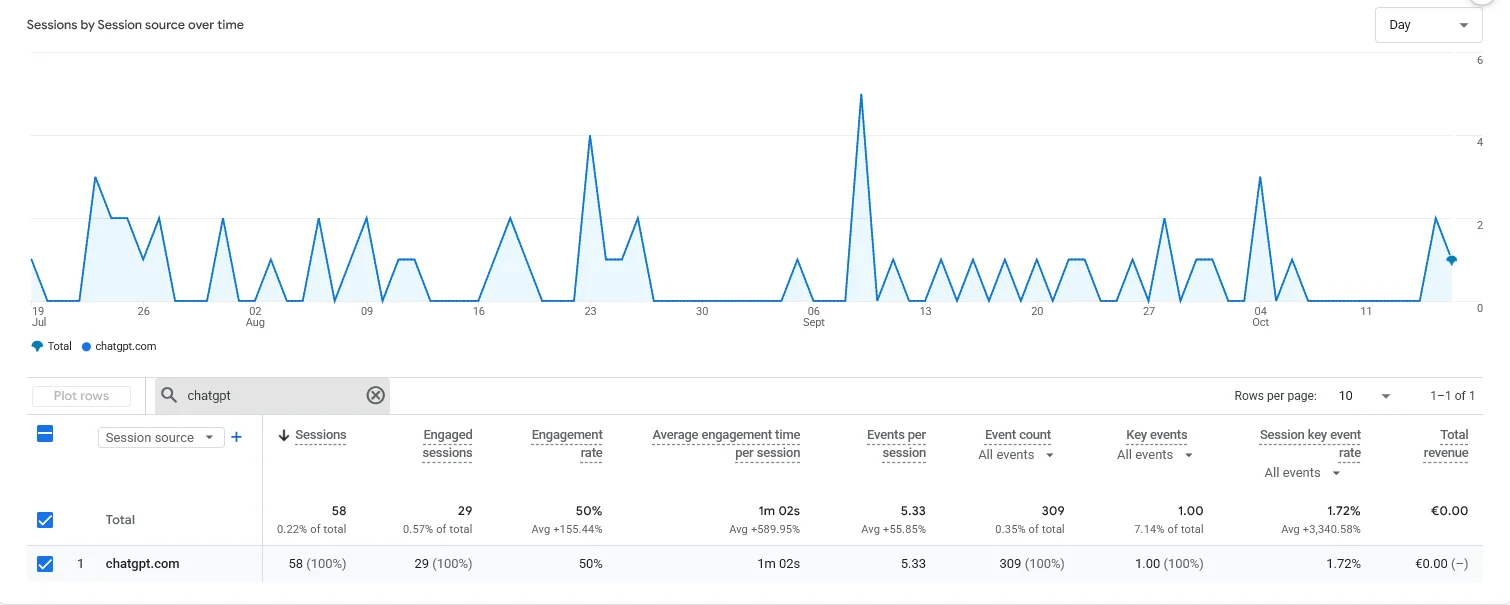 GA4 Traffic acquisition in our own property, last 90 days, October 2026: 58 sessions from chatgpt.com, 1 key event.
Report the 58 sessions and it looks busy. Report the one key event and you see what reached the business.
Pattern 3: working reactively
The team responds to whatever stands out this week, instead of following a set direction.
That’s how random tasks emerge. Each looks logical on its own, but together they tell no story.
Marketing strategy vs random tasks: what’s the difference?
One question settles it: is there a plan behind what my agency does, or just random tasks?
You recognize the difference by a few signals. Here they are side by side:
| Signal | Random tasks | Real strategy |
|---|---|---|
| Connection | Activities with no link to each other | One clear goal every action hangs on |
| ”Why now?” | No clear answer | An explanation for what is or isn’t done |
| Channels | Running separately | Audience, message and channels reinforce each other |
| Reporting | Vanity metrics, little on leads | Metrics tied to growth, not just reach |
| Planning | Reinvented every month | A roadmap months ahead |
The one-question test
A good marketing partner can explain at any moment how today’s action contributes to this quarter’s goal.
If they can’t, you probably have random tasks instead of a plan.
This is, incidentally, one of the clearest red flags at a lead generation agency. More warning signs are in our list of marketing agency red flags.
Why random tasks cost more than you think
Disconnected work also shows up to buyers.
In a Gartner survey of 632 B2B buyers, run from August to September 2024, buyers reported these frustrations:
73% actively avoid suppliers who send irrelevant outreach. And 69% notice inconsistencies between a supplier’s website and what its sellers say.
That’s what random tasks produce: messages that don’t line up.
What does a real marketing strategy look like?
A fixed structure in five layers, from foundation to execution.
What does a real marketing strategy look like, and not just some posts? Here’s the build-up:
1. Goals and starting points
It all starts with the question: what do we want to achieve, and by when?
Think of targets such as a set number of leads per month, a lower cost per customer or growth in one segment.
Without this anchor, every action is arbitrary.
Our experience: we translate the marketing strategy into KPIs and the indicators we monitor, before any execution starts.
2. Audience and positioning
Who do you want to reach, and why would they choose you?
A real strategy makes sharp choices about your ideal customer profile and your distinctive message. That sets the tone of every post and every ad.
Our experience: positioning is the most powerful first step to lower acquisition cost. Fewer non-fitting companies in the funnel means significantly lower overhead.
A one-line positioning statement is a good test of whether that choice has been made.
3. Channels and roles
Which channels do you use, and what role does each one play?
- SEO: builds long-term findability
- Ads: deliver traffic faster
- Email: nurtures the relationship
Many B2B buyers orient themselves online, and increasingly through AI search assistants, before they get in touch.
In the same Gartner survey of 632 B2B buyers, 61% preferred an overall rep-free buying experience. So visibility in several places matters.
Google’s AI features follow the same rules as regular search: there are no extra requirements to appear in AI Overviews or AI Mode.
Solid SEO is the foundation for both.
4. Roadmap and priorities
This is where the choices become a plan for the coming months.
Not everything at once, but in order of impact. A roadmap makes clear what comes first, and why.
For example, a 90-day plan might fix tracking in month one, launch one campaign in month two and test a second channel in month three. Our 90-day growth marketing roadmap works one out.
Our experience: we deploy budget dynamically. Quick fixes come first, then tests to prove traction; if traction is missing, we find out why.
5. Measuring and adjusting
Finally, you set out how you measure success.
Good marketing KPIs connect activity to results: from click to lead to customer.
Those steps need shared definitions. HubSpot’s lifecycle stages are a common starting point:
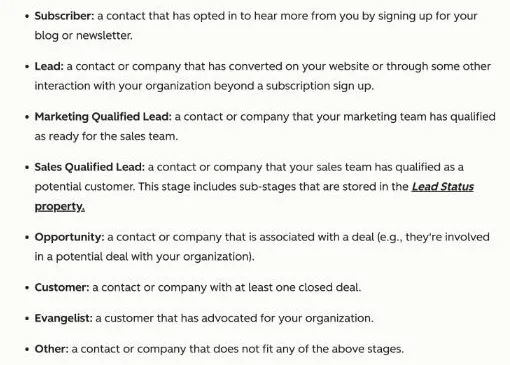 HubSpot’s lifecycle stage definitions, checked 18 October 2026.
Every quarter you look back and adjust. A fixed reporting cadence keeps that review from slipping.
This structure is what separates a genuinely strong digital marketing agency from an executor who ticks off tasks.
What can you rightfully expect from your marketing partner?
A shared plan, transparency, ownership, honest reporting and availability.
It wouldn’t be fair to tar every agency with the same brush. An executor who does good work is valuable, as long as the agreements are clear.
Strategist or executor?
The problem is usually a role mix-up: you expect a strategist, but you hired an executor.
Our piece on what a marketing agency does helps you name which one you need.
Five things you can expect
That’s why it helps to know what you can reasonably expect:
- A shared plan: one you both stand behind, not just a task list
- Transparency: about what happens, why and what it costs
- Ownership: of your accounts and data, so you’re never held hostage
- Honest reporting: that also shows what isn’t working
- Availability: a partner who answers when things get tough
Put those in writing. Our guide to the marketing agency contract shows which clauses matter.
When it’s time for a conversation
If you recognize the opposite, such as a marketing agency that can’t guarantee results and doesn’t show a plan either, it’s time to talk.
Sometimes it’s enough to recalibrate the agreements. Sometimes switching to another agency is the right move.
What can you do yourself to regain control?
Ask a few targeted questions; you’ll quickly sense whether a plan exists.
You don’t have to wait until things go wrong.
Ask for the strategy on one page
Ask your marketing partner for the strategy on a single page: goal, audience, channels and the roadmap for this quarter.
If they can’t deliver that, you know enough.
Ask how each activity earns revenue
Also ask how each activity contributes to your revenue, not to your reach.
Our experience: we start with a root cause analysis before any advice. You don’t ask a doctor for a specific medicine before the cause is known.
Check who owns your accounts
Check whether you own your Google Ads account and your website yourself, because without ownership you’re stuck.
Google Ads has five access levels: Admin, Standard, Read only, Billing and Email only. Only Admin access can give account access and change other users’ levels.
So make sure someone inside your company holds Admin:
Ask the right questions
A good exercise is also to ask your SEO agency the right questions.
The answers immediately reveal whether there’s strategic thinking or just tasks being carried out.
Ready for a plan instead of random tasks?
Do you feel there’s activity but no direction? Then have your marketing looked at objectively.
Not to trash your current partner, but to get clarity on whether a real strategy underpins it.
At Customer Impact we always work from a plan: first the marketing strategy and roadmap, then the execution of lead gen, ads, SEO, GEO and web.
Contact us with your last three monthly reports, and we’ll tell you whether they show a plan or just random tasks.
Frequently asked questions
My marketing agency is just winging it without a clear strategy, what now?
Ask first for the strategy on a single page: goal, audience, channels and roadmap. If you don’t get it, a plan is probably missing. Discuss this openly with your partner and agree on concrete goals and metrics. If nothing changes, switching agencies is a well-founded choice.
Is there a plan behind what my marketing agency does, or just random tasks?
Test it with one question: can your partner explain how today’s action contributes to this quarter’s goal? A yes with a clear line points to strategy. A vague answer or a reference to reach and likes points to random tasks.
What does a real marketing strategy look like, and not just some posts?
A real strategy starts from measurable goals, chooses an audience and positioning, gives each channel a role and translates that into a roadmap with priorities. Posts and ads are then the execution of that plan, not standalone activities in themselves.
How do I know if my marketing partner is reporting on the right things?
Check whether the reporting draws the line from activity to result: from click to lead to customer. Reach and likes aren’t enough on their own. Good metrics connect your marketing to your revenue and also honestly show what isn’t working.
Should I switch if there is no strategy?
Not right away. Start with the conversation and give your partner the chance to put a plan on the table. If it stays random tasks without direction, and you recognize several signs of an underperforming agency, then switching is a sensible step.
Free website scan
Enter your website and get an automatic scan within minutes, with concrete technical and SEO improvements. No sales pitch.
We only use your details for your scan. No spam, unsubscribe anytime.