
Branding
How much does logo design cost? Prices per type of designer
Copy for AI
Logo design costs from free to over 6,000 euros, depending on who designs it.
That spread is neither a coincidence nor a scam. Behind every price sits a different kind of work, a different level of thinking and a different degree of usability.
The verdict: you don’t pay for a picture, you pay for the thinking and the usability. The right budget depends on how much your brand has to carry.
Below: logo design cost per type of designer, what really drives the price, and when going cheap ends up costing you more.
How much does a logo cost? Prices per type of designer
Here’s a realistic picture per channel. These are ranges you’ll meet in the Belgian and Benelux market, not made-up exact figures.
| Type of designer | Typical logo design cost | Best for |
|---|---|---|
| Logo generator or AI tool | Free to a few dozen euros | A hobby project or short test |
| Microfreelance (Fiverr) | Roughly 20 to 150 euros | A placeholder with low stakes |
| Design contest (99designs) | €289 to €1,299 excl. VAT | Many concepts, little strategy |
| Freelance graphic designer | Roughly 500 to 2,000 euros | SMEs with clear positioning |
| Design studio or branding agency | Roughly 2,000 to 6,000 euros and up | A brand that drives growth |
How we checked: the 99designs prices come from its Belgian pricing page, checked 20 October 2026. The other ranges are market ranges, not quotes.
Here are the same ranges side by side, using the top of each range:
Now each channel in more detail.
1. Logo generators and AI tools (free to a few dozen euros)
You type in your company name and a tool spits out dozens of variants.
Canva, for example, is where many people start. Its home screen starts you off from a format or a search:
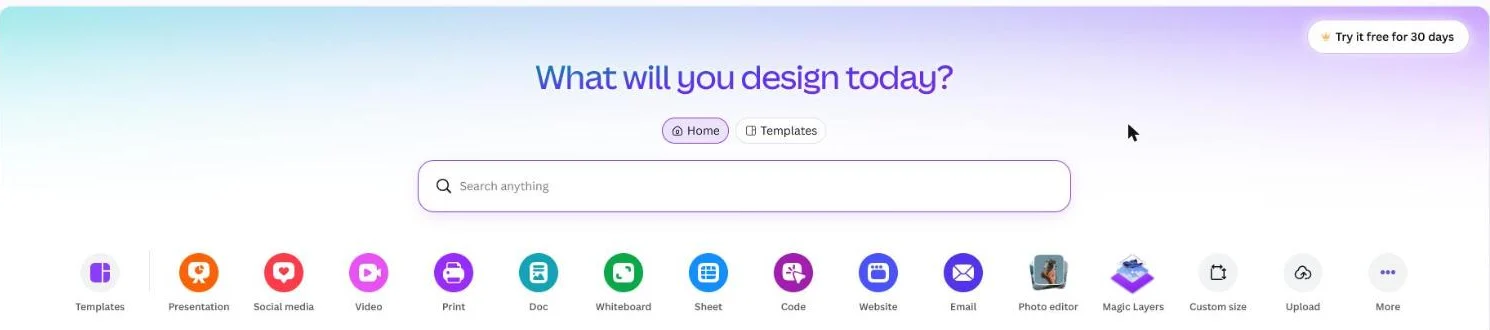 Canva’s home screen, 17 October 2026. Logo templates sit one search away, which is exactly why so many look alike.
Biggest strength: fast and cheap.
Watch out: you get a template that thousands of others can get too. Canva says it plainly: your rights are non-exclusive and you can’t register the logo as a trademark.
AI features are capped too. On Canva’s free plan, the AI allowance is limited per month:
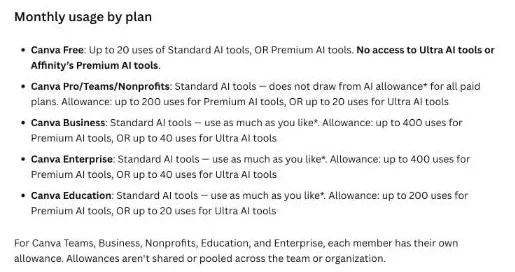 Canva’s AI allowance per plan, checked 18 October 2026: up to 20 uses on Canva Free.
For a hobby project or a temporary test phase that can suffice. For a brand that has to last for years, it’s usually a false start.
2. Microfreelance platforms like Fiverr (roughly 20 to 150 euros)
Here you buy a logo as a product.
The cheapest packages are often reworked templates. The more expensive ones offer a bit more custom work.
Watch out: the risk lies in usability. You rarely get the right file formats, no well-considered variants and no rationale for why this logo suits you.
3. Design contest platforms like 99designs (€289 to €1,299 excl. VAT)
Contest platforms such as 99designs sit one step up. On 99designs, a logo contest costs €289 to €1,299 excluding VAT, depending on the package.
Price: Bronze €289, Silver €479, Gold €859, Platinum €1,299, all excluding VAT (checked 20 October 2026).
Biggest strength: you get many concepts from different designers.
Watch out: there’s little strategy behind them. Nobody asks what your brand stands for.
4. Freelance graphic designer (roughly 500 to 2,000 euros)
An experienced freelancer thinks along with you and asks questions about your business.
You get a logo with variants, colour codes and file formats that work everywhere.
Best for: many SMEs. It’s the sweet spot between budget and quality, certainly if your positioning is already clear.
Our comparison of a freelance designer vs a branding agency helps you choose between the two.
5. Design studio or branding agency (roughly 2,000 to 6,000 euros and up)
Here you’re not buying a logo, but a process.
That means strategy, positioning, a logo that follows from it and often a complete visual identity around it.
Best for: brands that are an important growth lever, where “looks okay” versus “is spot on” touches your revenue.
A standalone logo is something different from a complete visual identity.
Why do the prices vary so widely?
The biggest misconception is that you’re paying for a drawing.
You pay for three things:
- the thinking beforehand
- the execution itself
- the usability afterwards
The thinking
The thinking is the difference between a pretty picture and a logo that means something.
A good designer or a good branding agency doesn’t start with Illustrator, but with questions:
- Who are you for?
- What should someone feel when they see your brand?
- How do you differ from your competitor?
That thinking explains a large part of the price difference.
A logo generator skips that step entirely. An agency makes it half the process.
The execution
Execution is the craft: form, typography, colour and the hundreds of small choices that make a logo look professional.
Experience costs money. You often only see the difference when you place two logos side by side.
Our guides on choosing brand colours and how to design a logo show what goes into those choices.
The usability
Usability is what many people underestimate. A professional logo comes in three sets:
- Versions: full, compact, symbol only
- Colours: colour, black, and white for dark backgrounds
- File formats: vector files that don’t blur, plus web and print versions
Vectors matter most. Adobe explains that vector files can’t become fuzzy or pixelated, however large or small you make them.
If you don’t get that, you get stuck months later. Your logo turns fuzzy on a facade sign or doesn’t work on your website.
What determines your price concretely?
Beyond the type of designer, four factors steer the final price.
Concepts and revision rounds
One concept with two adjustments is cheaper than three directions with unlimited tweaking.
For example: say two quotes show the same price. One includes a single concept, the other three. They’re not the same offer.
The deliverables
Only a logo, or also variants, colour codes, fonts and a mini usage guideline?
The more you get, the higher the price, but the fewer problems later. A short set of logo usage guidelines is often worth the extra.
The rationale
Do you get an explanation of why this logo works and how to deploy it, or just a file?
Strategy is part of the price.
Experience and reputation
An established studio charges more because the risk of a miss is smaller.
Here’s how the four factors move the price:
| Factor | Lower price | Higher price |
|---|---|---|
| Concepts and revisions | One concept, two rounds | Three directions, more rounds |
| Deliverables | A logo file | Variants, colours, fonts, guideline |
| Rationale | Just a file | Explanation and usage advice |
| Experience | Newer maker | Established studio |
When does cheap end up costing you more?
A cheap logo feels like a smart saving, until you run into the hidden costs.
We see the same pitfalls come back again and again.
Three hidden costs
Watch for these three:
- Wrong files: you still hire a designer to make the logo usable for print or large format.
- A template look: the logo resembles an existing template, so your brand looks interchangeable and may not be protectable.
- The wrong fit: nobody asked who you are, so within a year you pay again for a rebranding.
Before you register a name or mark, run a brand name availability check as well.
The most expensive mistake
That last one costs the most.
Renewing a logo because it was never right costs more than the new design. You also pay for:
- all your printed materials
- your website adjustments
- the trust you’d built up around that first logo
Our overview of rebranding cost shows how quickly that adds up.
When cheap is fine
Cheap is perfectly fine when the stakes are low: a temporary project, a test, an internal tool.
As soon as your logo becomes the face of your company towards customers, the price of a miss weighs heavier than the saving. Our piece on cheap branding explains where that line sits.
Don’t start with the logo, start with your brand
This is the most important lesson, and it’s independent of any price tag.
A logo isn’t a brand. It’s the visible tip of something larger:
- what you stand for
- who you’re there for
- how you differ
If you have a logo drawn without this being clear, you’re buying a gamble, however pretty the picture is.
Positioning first
That’s why we recommend getting your brand positioning sharp before you have anything designed.
Three questions to answer first:
- What’s your promise?
- Who’s your ideal customer?
- What feeling do you want to evoke?
With those answers in hand, every logo process becomes cheaper and better, because the designer doesn’t have to guess.
The difference between a logo and a full brand identity starts exactly here.
Then the price question is simple
Once you know what your brand stands for, you also know what level of logo design you need.
And what you can afford to pay for it.
Frequently asked questions about logo design cost
How much does a professional logo cost in Belgium?
For a freelance graphic designer, roughly 500 to 2,000 euros.
A design studio or branding agency usually starts around 2,000 euros and can reach 6,000 euros and up, often with a wider identity included.
Is a 99designs contest worth it?
It can be when you want many concepts fast. Prices run from €289 to €1,299 excluding VAT (checked 20 October 2026).
But you get little strategy behind the designs.
Can I trademark a logo made with Canva?
Not when it’s built on a Canva template. Canva says those rights are non-exclusive, so you can’t register that logo as a trademark.
Which files should a logo designer deliver?
At least vector files, plus web and print versions, in colour, black and white. Also ask for a full, a compact and a symbol-only version.
Conclusion: pay for usability, not for a picture
What logo design costs depends entirely on what you need:
- A test: a logo generator suffices.
- A growing SME with clear positioning: a freelancer.
- A brand that’s a serious growth lever: an agency.
In all cases one rule holds: you pay for the thinking beneath it and the usability afterwards.
Not sure which level fits, or want your logo to follow from a considered brand strategy? Get in touch with us and we’ll tell you which level your brand needs.
Free website scan
Enter your website and get an automatic scan within minutes, with concrete technical and SEO improvements. No sales pitch.
We only use your details for your scan. No spam, unsubscribe anytime.