
AI & GEO
ChatGPT Alternatives: The 6 Best Options for B2B (2026)

Copy for AI
The best ChatGPT alternative depends on the job you need it for.
The verdict: Claude for writing and analysis, Perplexity for sourced research, Gemini or Copilot inside Google or Microsoft, Mistral when data must stay in Europe.
There are strong options, and almost all of them have a free version.
Below we line up the six best ChatGPT alternatives for B2B teams. For each one you get who it suits, what it costs and where to watch out.
Why look for a ChatGPT alternative?
ChatGPT is the default starting point for a lot of people. But there are three good reasons to look further.
Privacy and EU data
For a B2B company, sensitive information on non-European servers isn’t always acceptable.
Some alternatives process data inside the EU or offer stricter guarantees. That makes the conversation with your DPO or legal team a great deal easier.
Our guide to EU hosting and GDPR data residency explains what to ask a vendor.
Cost
A paid ChatGPT subscription per user adds up quickly across a whole team.
For example, say 10 people each need a 20-dollar monthly seat, the list price of Claude Pro. That’s 2,400 dollars a year before tax.
Several alternatives have generous free versions or cheaper pricing, especially the open models.
Specific strengths
No single engine is best at everything.
One excels at long documents such as contracts, another at verified research, yet another at connecting to your existing software. Choose deliberately and you get more out of AI than with a default pick.
Which alternative fits which task?
Start from your main task, then pick the engine. Here’s the decision in one picture:
DeepSeek sits outside this picture on purpose. It’s the budget pick for technical teams, with a privacy trade-off.
The 6 best ChatGPT alternatives
First the overview, then the details per option. Prices change by plan and country, so check the official page before you choose.
| Alternative | Best for | Free version | Watch out / data location |
|---|---|---|---|
| Claude (Anthropic) | Writing, reasoning, long documents | Yes | US company, paid plan for the strongest models |
| Google Gemini | Teams on Google Workspace, up-to-date info | Yes | US company, data in the Google environment |
| Perplexity | Research with source citations | Yes | US company, Pro version for more depth |
| Mistral / Le Chat | EU data sovereignty, open models | Yes | French company, data processing inside the EU |
| Microsoft Copilot | Working inside Microsoft 365 | Yes (consumer) | Leans on the Bing index, business licence for internal data |
| DeepSeek | Low budget, open models | Yes | The public app runs via servers in China |
Our experience: in our own daily work we use Claude and ChatGPT most, plus Claude Code for building, design and dashboards.
1. Claude (Anthropic)
Claude is the strongest alternative for writing, reasoning and long documents.
Many people use ChatGPT for quick answers. They choose Claude for nuanced text, thoughtful analysis and work where tone and precision matter.
For coding, too, Claude has an excellent reputation. The models and terms are laid out at anthropic.com.
- Best for: marketers, consultants, lawyers, anyone who summarises or writes a lot
- Biggest strength: long documents and careful, well-structured writing
- Price: free plan; Pro at 20 dollars a month, or 17 dollars billed yearly (Claude pricing, checked 4 November 2026)
- Watch out: US company; the strongest models sit in the paid plans
Here’s where the free plan stops and Pro starts:
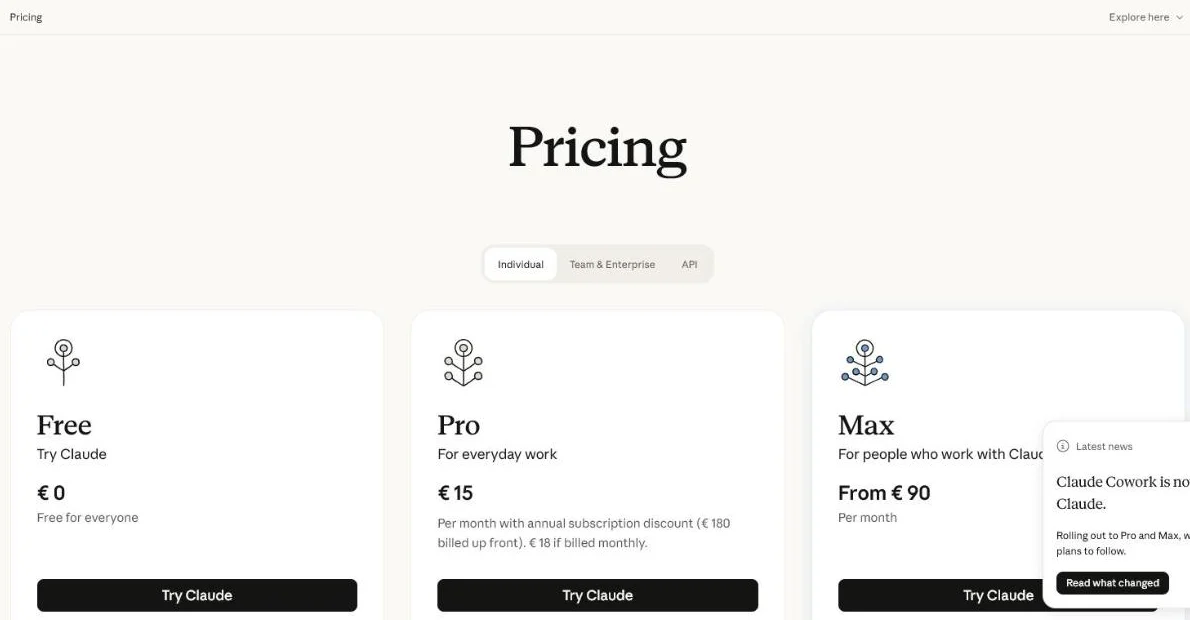 Claude’s Free plan next to Pro, checked 17 October 2026. From Belgium the page showed euro (Pro EUR 15 per month billed yearly).
You can read a detailed comparison in Claude vs ChatGPT.
2. Google Gemini
Gemini is the logical choice if your organisation already works in Google Workspace.
The model is built into Gmail, Docs and the rest of the Google environment. It can draw on Google Search for up-to-date information.
That makes it strong for teams that don’t want to step out of their existing tools.
- Best for: companies running on Google that value recency and integration
- Biggest strength: multimodal, and built into the tools you already open
- Price: free version; paid Google AI plans on top (see the screenshot below)
- Watch out: US company, with data in the Google environment
The free plan sits next to the paid Google AI tiers:
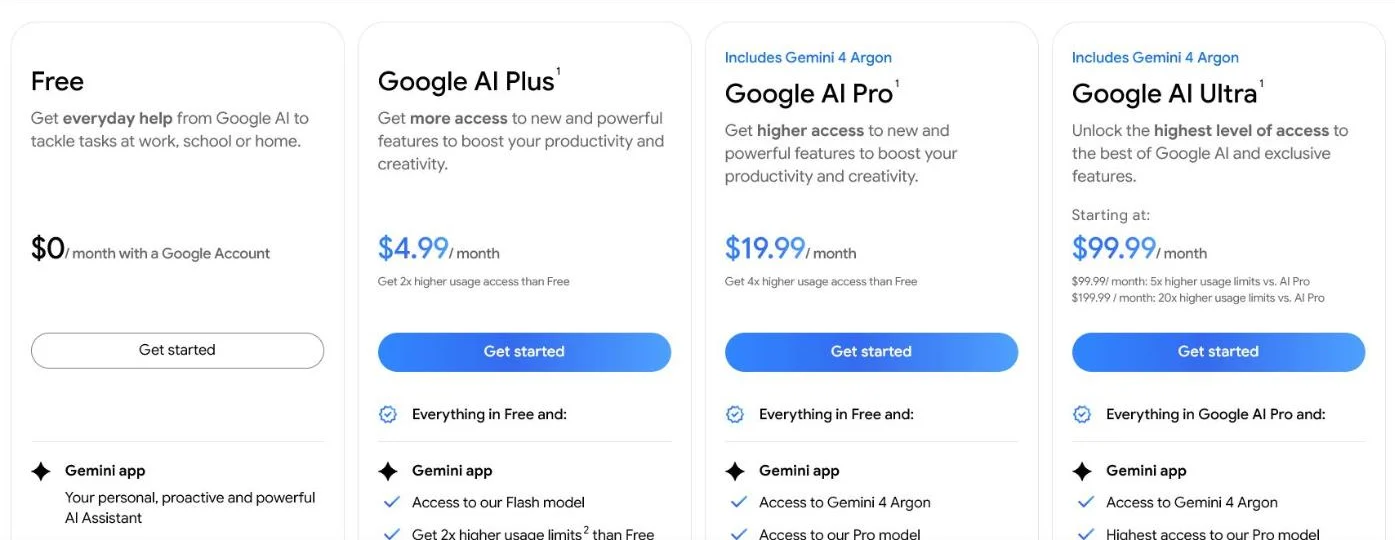 Gemini’s free plan next to the paid Google AI plans, checked 17 October 2026 (US prices in dollars).
How it stacks up against ChatGPT is covered in ChatGPT vs Gemini.
3. Perplexity
Perplexity isn’t a classic chatbot but an answer engine.
It searches the web in real time and adds the sources to every answer. That’s excellent for research where you need to check where information comes from.
With ChatGPT, that’s not always as transparent.
- Best for: researchers, analysts and anyone who needs sourced answers fast
- Biggest strength: a source chip on every claim
- Price: free with daily limits; Pro unlocks stronger models and more depth
- Watch out: US company; the free limits run out fast on heavy research days
Perplexity’s own plan table shows those free limits:
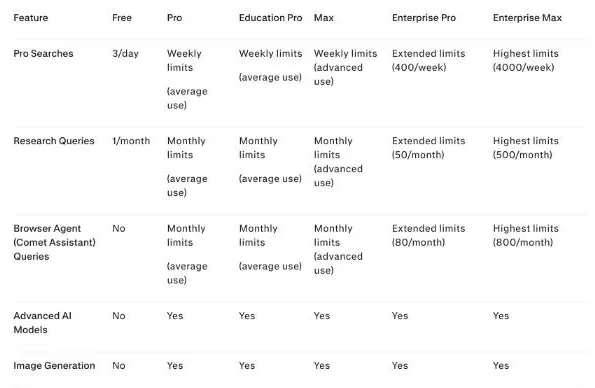 Perplexity’s own Free vs Pro comparison, checked 18 October 2026.
That’s 3 Pro Searches a day and 1 Research query a month on the free plan.
The difference in sourcing is easy to see. Here’s the same prompt in ChatGPT free and in Perplexity free:
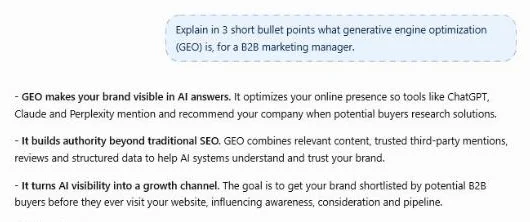 ChatGPT free (temporary chat), 17 October 2026: three bullets, about 90 words, no sources.
Now the same prompt in Perplexity. Look at the source chip after each bullet:
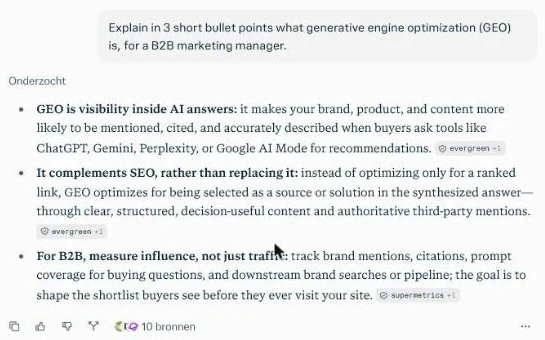 Perplexity free, logged out, 17 October 2026: three bullets, a source chip on every bullet and 10 sources in total.
Same question, but only one answer lets you check every claim. The differences are set out in Perplexity vs ChatGPT.
4. Mistral / Le Chat (the EU option)
Mistral is a French AI company, and so the most obvious European alternative.
Its assistant, Le Chat, runs on European models. Its data processing aligns better with the GDPR and with organisations that keep data inside Europe.
For a B2B company with privacy high on the agenda, that’s a real difference. You can read more about the company and the models at mistral.ai.
- Best for: organisations that value data sovereignty and European anchoring
- Biggest strength: partly open models you can host or integrate yourself
- Price: free version; Pro at 14.99 dollars a month and Team at 24.99 dollars per user a month, excluding tax (Mistral pricing, checked 4 November 2026)
- Watch out: the pricing page now also labels the chat product “Vibe”, so don’t get confused by the name
How Le Chat specifically compares is covered in our comparison of AI search engines and in Mistral vs ChatGPT.
5. Microsoft Copilot
Copilot is the alternative for people who work in Microsoft 365 all day.
It’s built into Word, Outlook, Teams and Windows. Alongside the web, it can also bring in your own company documents via Microsoft Graph.
For buyers who never leave their Microsoft environment, that’s the most natural channel.
- Best for: larger enterprises and regulated sectors, such as finance, that run on Microsoft
- Biggest strength: works inside the Office apps your team already has open
- Price: free for consumers; the business Microsoft 365 Copilot licence unlocks internal data
- Watch out: web answers lean heavily on the Bing index
Copilot’s sign-in page shows where it lives:
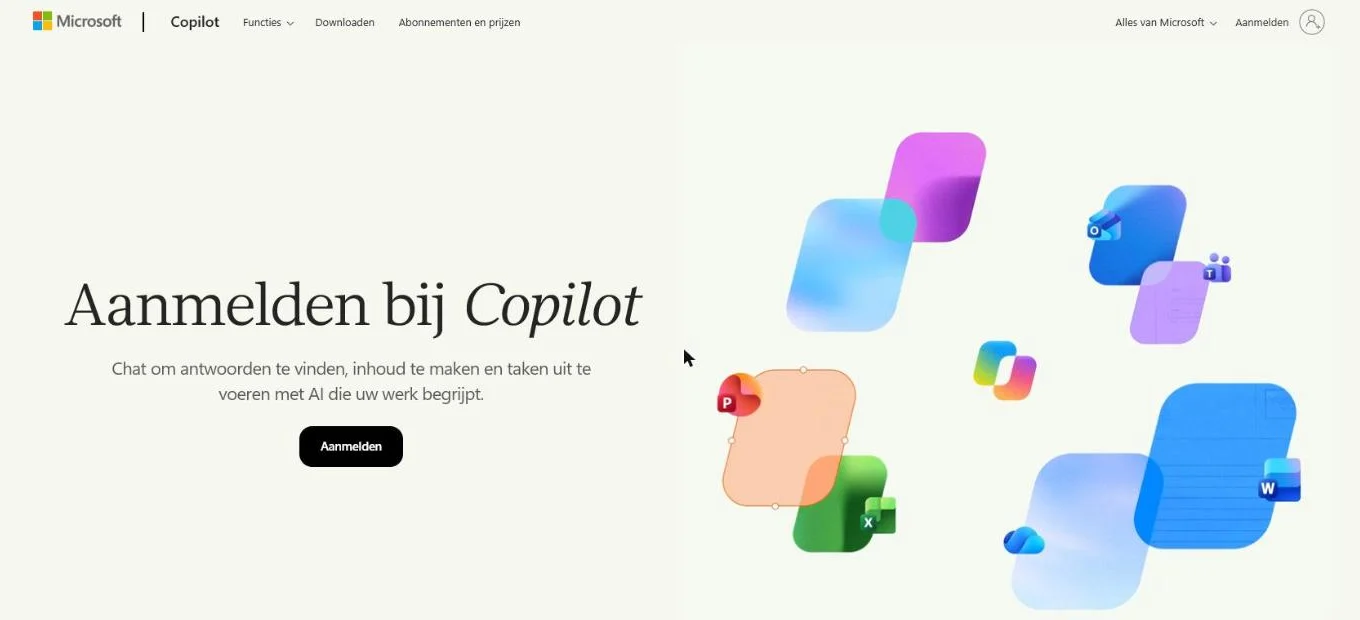 Microsoft’s Copilot sign-in page, Belgian Dutch interface, October 2026. The Office app icons show where Copilot lives.
More on that in Copilot vs ChatGPT for B2B.
6. DeepSeek
DeepSeek is a Chinese model that stood out for strong performance at a fraction of the cost.
The models are largely open and the assistant is free to use. That’s attractive if you watch your budget or want to experiment with open models yourself.
- Best for: technically driven teams and cost-conscious users
- Biggest strength: open models with strong performance for the price
- Price: the public assistant is free to use
- Watch out: the public app stores data in China
Be clear about that flip side. DeepSeek’s privacy policy says: “we directly collect, process and store your Personal Data in People’s Republic of China” (DeepSeek privacy policy, last updated 10 February 2026).
For many B2B companies, that’s a reason to keep sensitive information out. Hosting the open model yourself partly sidesteps it.
The comparison is in DeepSeek vs ChatGPT.
What about the free alternatives?
Free access is the rule rather than the exception.
Claude, Gemini, Perplexity, Le Chat and DeepSeek all have a usable free version. Copilot is free for consumers too.
For many daily tasks, those free versions take you a long way. You can try several engines side by side before choosing anything.
What about Grok?
Want a different character altogether? There’s also Grok from xAI.
It has its own, more direct tone and is tied to X:
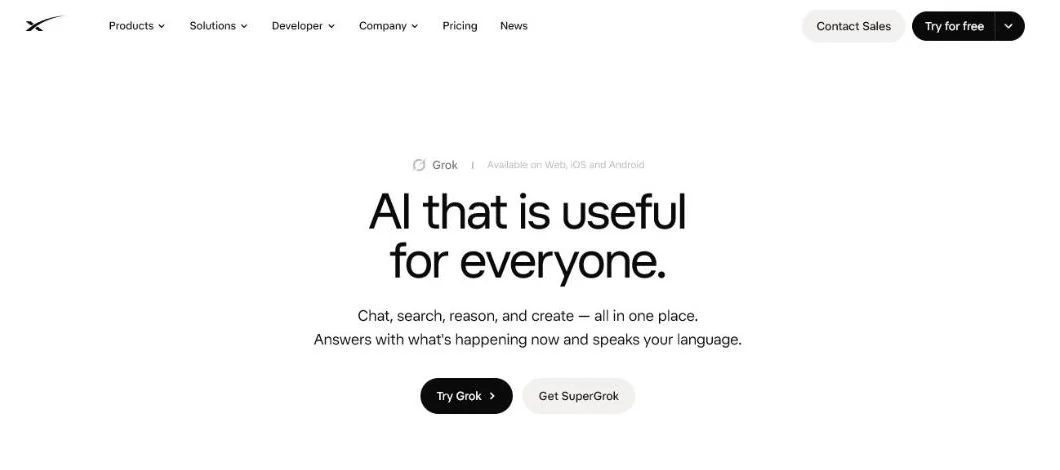 x.ai/grok on 17 October 2026: free to try, with SuperGrok as the paid upgrade.
How it compares to ChatGPT is covered in Grok vs ChatGPT.
Rule of thumb: choose your final tool on your main task, not on which name is most in the news.
For a three-way look at the biggest names, see ChatGPT vs Claude vs Gemini.
What does this mean for your visibility in AI?
Your buyers won’t all choose the same engine, so you need to be cited in all of them.
One buyer opens ChatGPT, another Gemini. A researcher uses Perplexity and an enterprise buyer leans on Copilot.
You can’t steer which tool they reach for. You can steer whether your brand gets mentioned in the answer.
What is GEO in this context?
That’s exactly what generative engine optimization is about.
It’s not about becoming visible in a single engine. It’s about being the reliable source that every engine cites.
The foundation is largely the same for every engine:
- Crawlable site: clean pages that AI crawlers can read
- Clear answers: to the exact questions your buyer asks
- Proof: sources, data and first-hand experience others cite
How engines decide which source they trust is explained in grounding: how AI determines what is true. The broader approach is in our GEO guide for 2026.
Want a quick read on where you stand? Run your domain through our free AI visibility checker.
Frequently asked questions
What is the best free ChatGPT alternative?
It depends on your task. For writing and analysis, the free version of Claude is strong, for research with sources it’s Perplexity, and for teams on Google Workspace it’s Gemini. Claude, Gemini, Perplexity, Le Chat and DeepSeek all have a usable free version, and Copilot is free for consumers.
What is the best European ChatGPT alternative?
Mistral with the assistant Le Chat is the most obvious European alternative. It’s a French company with data processing that aligns better with the GDPR, which makes the conversation with your DPO easier. The models are partly open, handy for teams that want to host themselves.
Is there a ChatGPT alternative that keeps data inside the EU?
Yes, Mistral / Le Chat processes data inside Europe and is therefore the strongest choice for organisations that value data sovereignty. With other options, watch the data location: most large engines are American, and the public DeepSeek app runs via servers in China.
Which ChatGPT alternative is cheapest for a team?
Start with the free versions. Among the paid plans we checked on 4 November 2026, Le Chat Team was 24.99 dollars per user a month and Claude Team 25 dollars per standard seat billed monthly, both before tax.
Which engines already mention you?
Pick the engine for your task, then make sure your brand shows up in all of them.
Want to know which AI engines your B2B buyers already find you in? Explore our generative engine optimization service.
Or contact us and we’ll look at your brand across the main engines together.
Free website scan
Enter your website and get an automatic scan within minutes, with concrete technical and SEO improvements. No sales pitch.
We only use your details for your scan. No spam, unsubscribe anytime.